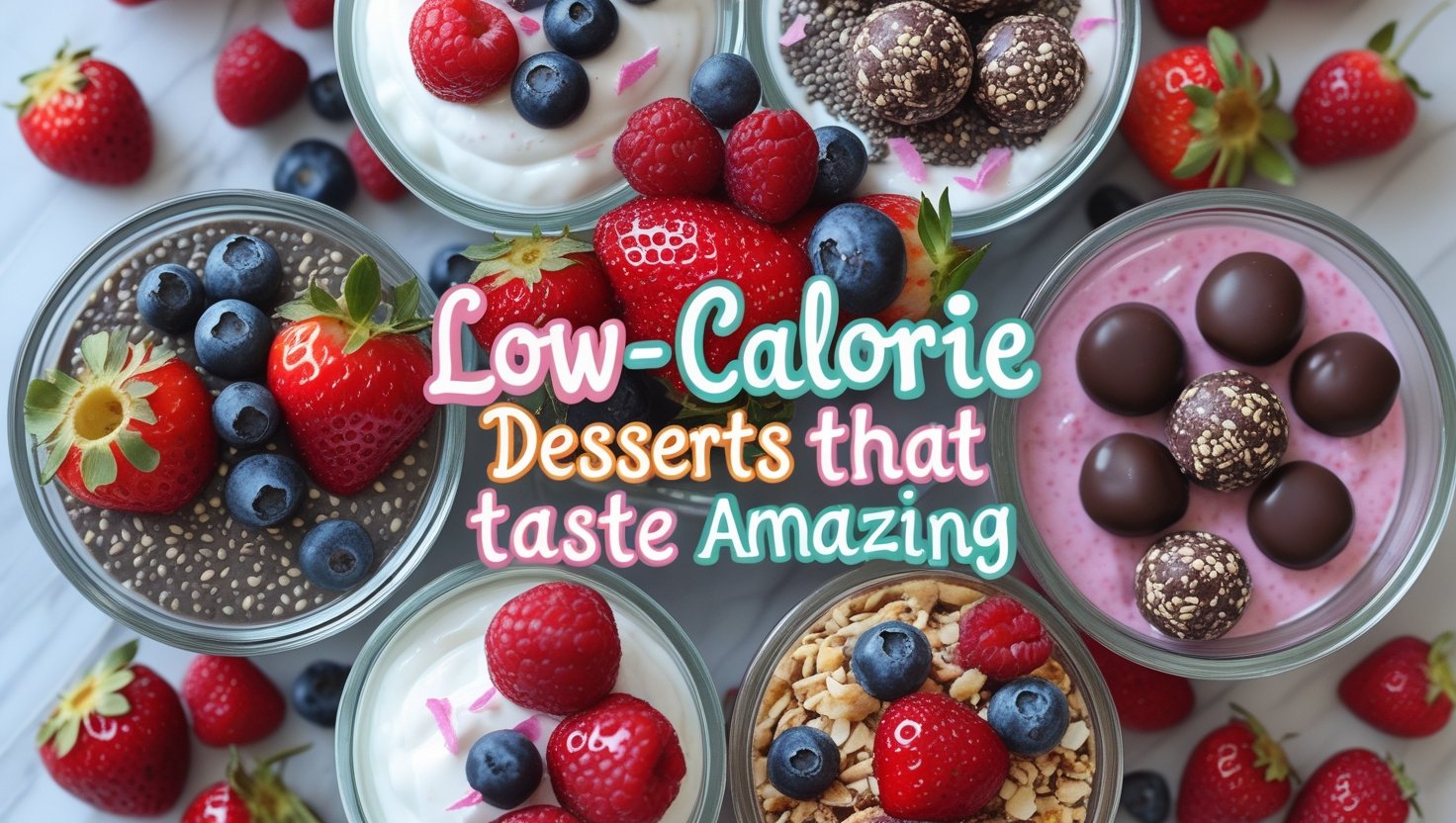
Craving something sweet but worried it will derail your health goals? Don’t let the word “dessert” automatically trigger guilt. Low-calorie desserts are no longer a flavorless compromise. The era of bland, “diet” foods is over. Today, you can indulge your sweet tooth with treats that are not only delicious but also support a balanced lifestyle. This article will show you how to enjoy incredible desserts that are surprisingly light, proving you can have your cake and eat it too.
The Art of a Savvy Sweet Tooth:
The secret to creating amazing low-calorie desserts isn’t about deprivation; it’s about smart ingredient substitutions. It’s a complete shift in mindset from simply cutting things out to creatively adding better-for-you components. Instead of relying on refined sugars and heavy fats, we can tap into the natural sweetness of fruits, the richness of high-protein ingredients, and the textural magic of whole foods. This approach not only slashes calories but also often boosts the nutritional value, adding fiber, vitamins, and antioxidants. It’s a win-win for your taste buds and your body.
For example, a classic dessert like a creamy mousse can be transformed into something new. Traditional recipes might use heavy cream and lots of sugar, but a modern twist might involve using Greek yogurt or avocado as a base. These ingredients provide a luxurious, creamy texture while offering a wealth of nutrients. A Greek yogurt mousse gives you a protein boost that helps you feel fuller and more satisfied, preventing a sugar crash. Meanwhile, an avocado mousse is rich in healthy fats, which are essential for brain health and nutrient absorption. The subtle, earthy flavor of the avocado disappears when mixed with cocoa powder, creating a decadent, fudgy chocolate dessert you wouldn’t believe is healthy. This isn’t just about making a lighter version of a classic; it’s about innovating a better, more wholesome one.
Beyond the Fruit Bowl:
While a simple fruit bowl is always a great option, the world of healthy desserts is so much bigger. By getting creative with ingredients, you can make everything from rich, chocolatey treats to refreshing, fruity concoctions. The key is to think outside the box and use natural ingredients to achieve the flavors and textures you love. Here are some of the most innovative and delicious low-calorie dessert ideas that are sure to impress.
- Frozen Yogurt Bark with Berries and Nuts: Forget store-bought ice cream. This simple recipe involves spreading a thin layer of Greek yogurt on a baking sheet, topping it with fresh berries and chopped almonds, and freezing it until it’s solid. It’s an effortless treat that delivers on crunch, sweetness, and protein. You can also drizzle it with a small amount of melted dark chocolate for an extra layer of flavor. It feels like a luxurious, artisan dessert but takes minutes to prepare and is incredibly low in calories.
- Sweet Potato Brownies: It might sound strange, but cooked and mashed sweet potatoes can create an unbelievably moist and decadent brownie. They provide natural sweetness and a fudgy texture, reducing the need for large amounts of butter and sugar. Paired with cocoa powder and a touch of maple syrup, these brownies are rich, satisfying, and full of fiber and vitamins. It’s a prime example of how a simple vegetable can be a game-changer in the dessert world.
- Black Bean Chocolate Cake: Similar to the sweet potato brownies, black beans offer a unique and effective way to add moisture, fiber, and protein to a cake. When blended properly, they create a silky-smooth batter that bakes into a dense, moist, and wonderfully chocolatey cake. You won’t taste the beans at all, just a deep, satisfying chocolate flavor. It’s a remarkable way to enjoy a classic comfort food while getting a dose of plant-based goodness.
The Power of Natural Sweeteners and Flavor Enhancers:
One of the biggest culprits in high-calorie desserts is refined sugar. It provides empty calories and can lead to energy spikes and crashes. But what’s the alternative? Instead of artificial sweeteners, which can have an off-putting taste, you can turn to a variety of natural options that add flavor and complexity without the downsides.
- Maple Syrup and Honey: These natural sweeteners are less refined than white sugar and offer a unique flavor profile. While they still contain calories, a little goes a long way, especially when used to complement the natural sweetness of fruits.
- Dates: This little fruit is a powerhouse of natural sweetness and fiber. Blending dates can create a thick, sticky paste that works as an excellent binder and sweetener in no-bake desserts. Think date and nut truffles or a date-sweetened caramel sauce.
- Spices: Don’t underestimate the power of spices like cinnamon, nutmeg, and cardamom. They can amplify the natural sweetness of fruits and vegetables, making desserts feel more decadent without adding a single calorie. A simple baked apple with a sprinkle of cinnamon and a few raisins can feel like a complete dessert.
- Vanilla Extract and Salt: These pantry staples are crucial for a reason. A high-quality vanilla extract can make a dessert feel richer and more complex. A pinch of salt, often overlooked in sweet recipes, can balance flavors and make the other ingredients taste more vibrant.
Transforming Your Kitchen into a Healthy Dessert Lab:
Creating delicious low-calorie desserts is a fun experiment. It encourages you to explore new ingredients and techniques, and you’ll be surprised by the delicious results. To get started, focus on a few key swaps.
- Swap Butter and Oil: Instead of large amounts of butter or oil, consider using unsweetened applesauce, mashed bananas, or Greek yogurt. These ingredients add moisture and a velvety texture while drastically cutting down on fat and calories.
- Swap Refined Flour: For cakes and cookies, try using whole-wheat flour, oat flour, or even almond flour. These flours are higher in fiber and protein, which can make your desserts more satisfying.
- Embrace Fruits as a Base: Fruits like bananas, strawberries, and mangoes can be frozen and blended to create a creamy, ice cream-like “nice cream.” This technique uses only the fruit itself, giving you a naturally sweet, guilt-free frozen treat.
By stocking your pantry with these simple, health-conscious ingredients, you’ll be ready to whip up a delicious dessert whenever a craving strikes. This isn’t about giving up the things you love, but about rediscovering them in a way that feels good for your body and your soul. You can indulge in the pleasure of a sweet treat without the post-dessert guilt. With these creative and flavorful options, low-calorie desserts are no longer a chore, they are a source of pure, delicious joy.
Conclusion:
The idea that desserts must be a source of guilt is outdated. By embracing creative swaps and focusing on natural, whole-food ingredients, you can craft low-calorie desserts that taste amazing. These treats are not only better for your health but also offer a unique and satisfying culinary experience. It’s about being smart, not stingy, with your ingredients. So go ahead, satisfy that sweet tooth the smart way.
FAQs:
- Can low-calorie desserts actually taste good?
Yes, by using natural sweeteners, fruits, and innovative ingredients, low-calorie desserts can be incredibly delicious and satisfying.
- What are the best natural sweeteners for low-calorie baking?
Natural sweeteners, such as dates, honey, and maple syrup, are excellent alternatives to refined sugar.
- Are all “sugar-free” desserts healthy?
Not necessarily; many “sugar-free” items contain artificial sweeteners or high-calorie fats and flours, so it’s important to check the nutrition labels.
- How can I make a creamy dessert without heavy cream?
You can use ingredients like Greek yogurt, blended cottage cheese, or mashed avocado to achieve a creamy texture.
- What is “nice cream”?
“Nice cream” is a simple, healthy ice cream alternative made by blending frozen fruit, typically bananas, to a creamy consistency.
- Do low-calorie desserts help with weight loss?
When part of a balanced diet, they can help satisfy cravings, which prevents overeating and supports weight management.
About the Author